Quick answer
Good clearance teams sort the load into reuse, recycling, specialist handling and final disposal routes rather than treating everything as general waste.
How a well-run clearance is usually sortedSection titled How%20a%20well-run%20clearance%20is%20usually%20sorted
One of the first questions customers ask is what actually happens after the van leaves.
In a sensible clearance, the contents are separated into different streams rather than mixed together. That matters for cost, environmental impact and peace of mind.
Reuse firstSection titled Reuse%20first
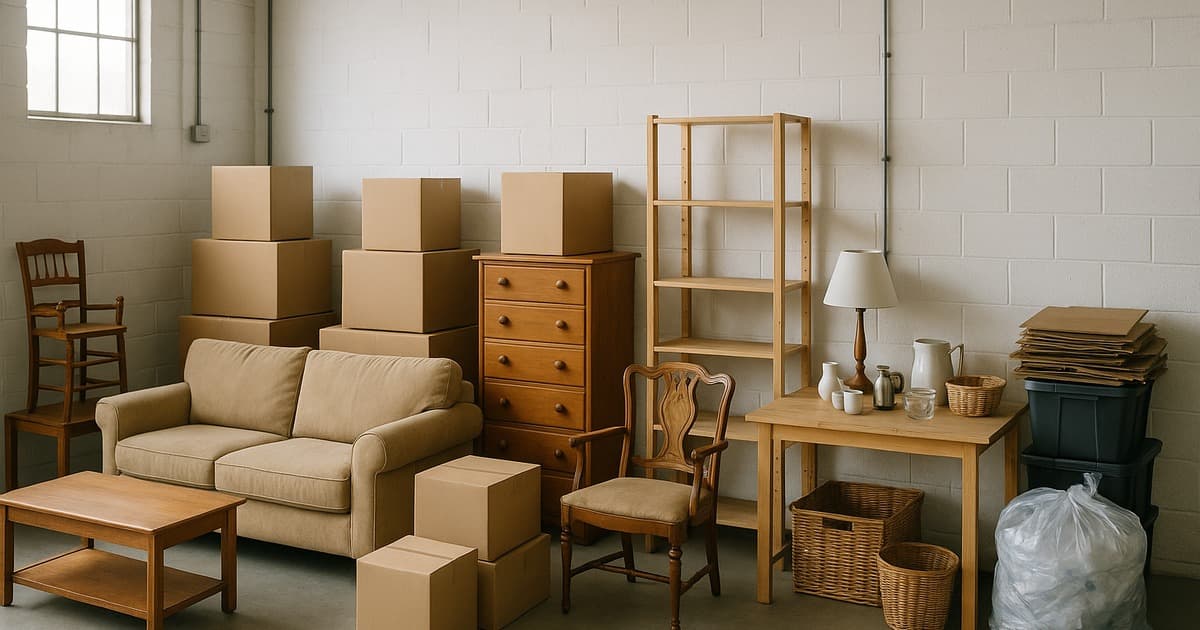
Furniture and household items in usable condition may be suitable for donation, resale or another practical reuse route. That is often the best outcome for decent-quality pieces that still have life left in them.
Recycling where possibleSection titled Recycling%20where%20possible
Metal, cardboard, wood, packaging and some appliance materials can often be separated into recycling streams instead of being handled as mixed waste.
Specialist handling for electricals and appliancesSection titled Specialist%20handling%20for%20electricals%20and%20appliances
Electrical items, white goods and some bulky appliances usually need a more specific route. That is why smaller appliance-only jobs often suit e-waste disposal or white goods disposal better than a general mixed-load booking.
Licensed disposal for the restSection titled Licensed%20disposal%20for%20the%20rest
Some items are too damaged, contaminated or unsuitable for reuse. Those still need to go through lawful disposal routes with a licensed waste carrier.
Items worth flagging before collectionSection titled Items%20worth%20flagging%20before%20collection
Not every item needs a separate service, but it does help to mention these categories in advance:
- fridges, freezers and washing machines
- televisions, computers and other electricals
- paint, chemicals or anything hazardous
- mattresses, broken furniture and soaked materials
- mixed garage or shed waste
The clearer the load is upfront, the easier it is to direct it to the right route once it is collected.
Questions worth asking before you bookSection titled Questions%20worth%20asking%20before%20you%20book
You do not need a technical waste lesson to arrange a clearance, but it is reasonable to ask:
- whether reusable items are separated from waste
- how electricals and white goods are handled
- whether mixed loads are sorted after collection
- whether the carrier is licensed
- whether there are any items that need advance notice
These questions are especially useful for probate and landlord clearances, where customers often want reassurance that good items are not being thrown away unnecessarily.
Which service fits the load best?Section titled Which%20service%20fits%20the%20load%20best%3F
| If the load is mainly... | Usually the better route |
|---|---|
| Full rooms of mixed household contents | House clearance |
| Loose waste and unwanted junk | Rubbish removal |
| Electrical items | E-waste disposal |
| Fridges, cookers and washing machines | White goods disposal |
Choosing the right service at the start often makes the whole job more straightforward.
Common questionsSection titled Common%20questions
Are all house clearance items thrown away?Section titled Are%20all%20house%20clearance%20items%20thrown%20away%3F
No. A proper clearance should separate reusable, recyclable and disposal items instead of treating everything as general waste.
Can old furniture be reused after a clearance?Section titled Can%20old%20furniture%20be%20reused%20after%20a%20clearance%3F
If furniture is still in usable condition, there may be sensible reuse or donation routes depending on the item and condition.
Do electrical items need different handling?Section titled Do%20electrical%20items%20need%20different%20handling%3F
Yes. Electricals and many appliances often need specialist processing rather than being mixed with ordinary household waste.
What if the property only has waste left after the useful items are gone?Section titled What%20if%20the%20property%20only%20has%20waste%20left%20after%20the%20useful%20items%20are%20gone%3F
That kind of job may be better suited to rubbish removal or a specialist disposal service rather than a full house clearance.